Problem
A mobile service needs to be accessible and welcoming while accommodating guest queues, volunteer tasks, and laundry equipment around one vehicle.
A laundry service built around dignity.
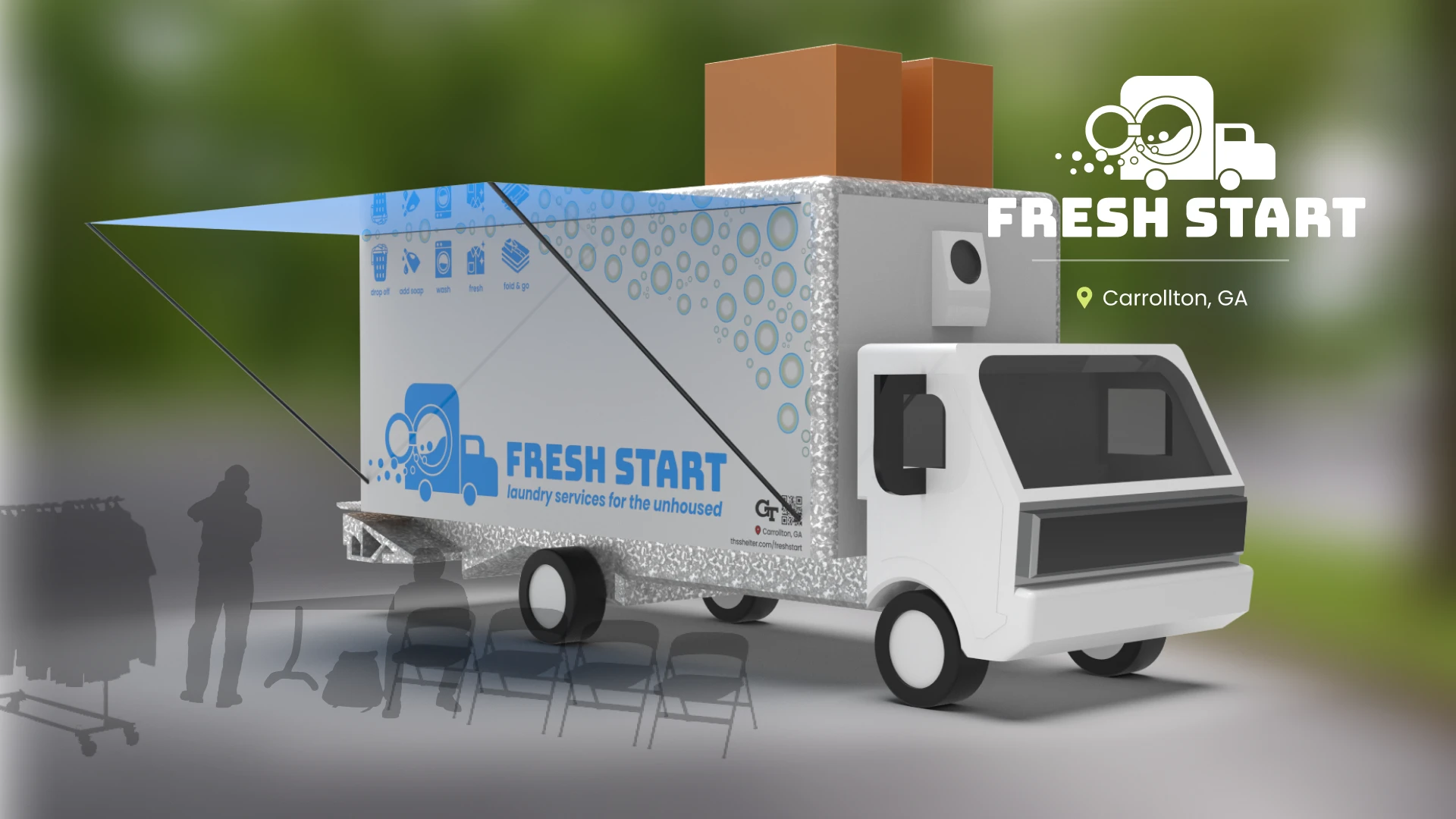
A grant-ready mobile laundry proposal connects service design, vehicle planning, and branding. The THS Group partnered with our team of 8 industrial design students to serve unhoused and underserved residents in Carrollton, Georgia. I contributed to service design and branding, alongside vehicle and equipment research.
A mobile service needs to be accessible and welcoming while accommodating guest queues, volunteer tasks, and laundry equipment around one vehicle.
A two-sided box truck service with clear guest and volunteer flows, an SMS completion signal, identifiable loads, and adaptable waiting areas.
Community needs and the existing laundry journey shaped the service priorities.
Carrollton figures recorded in the team’s project research.
I researched the current journey, vehicle and licensing options, and equipment needs. This connected service pain points with practical space, power, and water constraints.
User journey mapping exposed three service gaps: completion signals, waiting, and identifying loads.
Generic completion signals can be difficult to interpret for guests with disabilities.
Design response: SMS + a name call make completion explicit.
Guests spend much of the process waiting for their clothes.
Design response: Seating, activities, and essentials support that time.
It is unclear how volunteers can differentiate one guest’s load from another.
Design response: Name tags link the guest, bag, and load.
Accessible locations and service design, with dignity through access to clean clothes.
Hygiene, reduced shame, and stability, with support from the community.
Completion updates and identifiable loads reduce uncertainty at check-in and pickup.
Clear intake, load tracking, and setup make the service repeatable.
Equipment fit, storage, and a practical vehicle keep the proposal workable.
Core criteria: Laundry and shower facilities, storage, local-road access, cost-effective operation, and guest amenities.
Workshop ideas developed into vehicle, service, and branding directions. I worked on service design and branding, with some utility-system planning for the vehicle team.
We compared vehicle size, service space, and cost before selecting the box truck. I helped develop the concepts for the client presentation.
| Decision factor | Vehicle A | Vehicle BClient’s choice | Vehicle C |
|---|---|---|---|
| Vehicle | Box van / Type A bus | Box truck | Type C school bus |
| Concept length | 14 ft | 16 ft | 22 ft |
| Service space | Equipment-focused; limited amenities | Room for folding and a laundry queue | Extra storage and room to expand |
| Used vehicle estimate | $15,000–$35,000 | $10,000–$30,000 | $2,000–$50,000 |
Vehicle B fit the budget, used a box truck the client could access, and offered simpler licensing than the bus option.
After presenting the concepts to our client, we moved into refinement to finish the selected box truck proposal, including its vehicle layout, service flows, and identity.
The final proposal brings together vehicle layout, service touchpoints, and visual identity.
Blue and green reference water and freshness, while lime accents, Bungee headings, and Poppins supporting text establish a consistent identity.
Two CAD views organize equipment, supplies, and folding space around the dryer and washer sides.
Waiting and volunteer areas adapt to normal conditions, heat, and rain.
The proposed guest journey pairs clear completion updates with a supported waiting experience.
Unclear when clothes are done
SMS + a name call tell guests when to collect their laundry.
Long periods of waiting
Seating, community activities, and essentials support the wait.
The volunteer flow uses name tags and a recorded queue to connect each load to its guest.
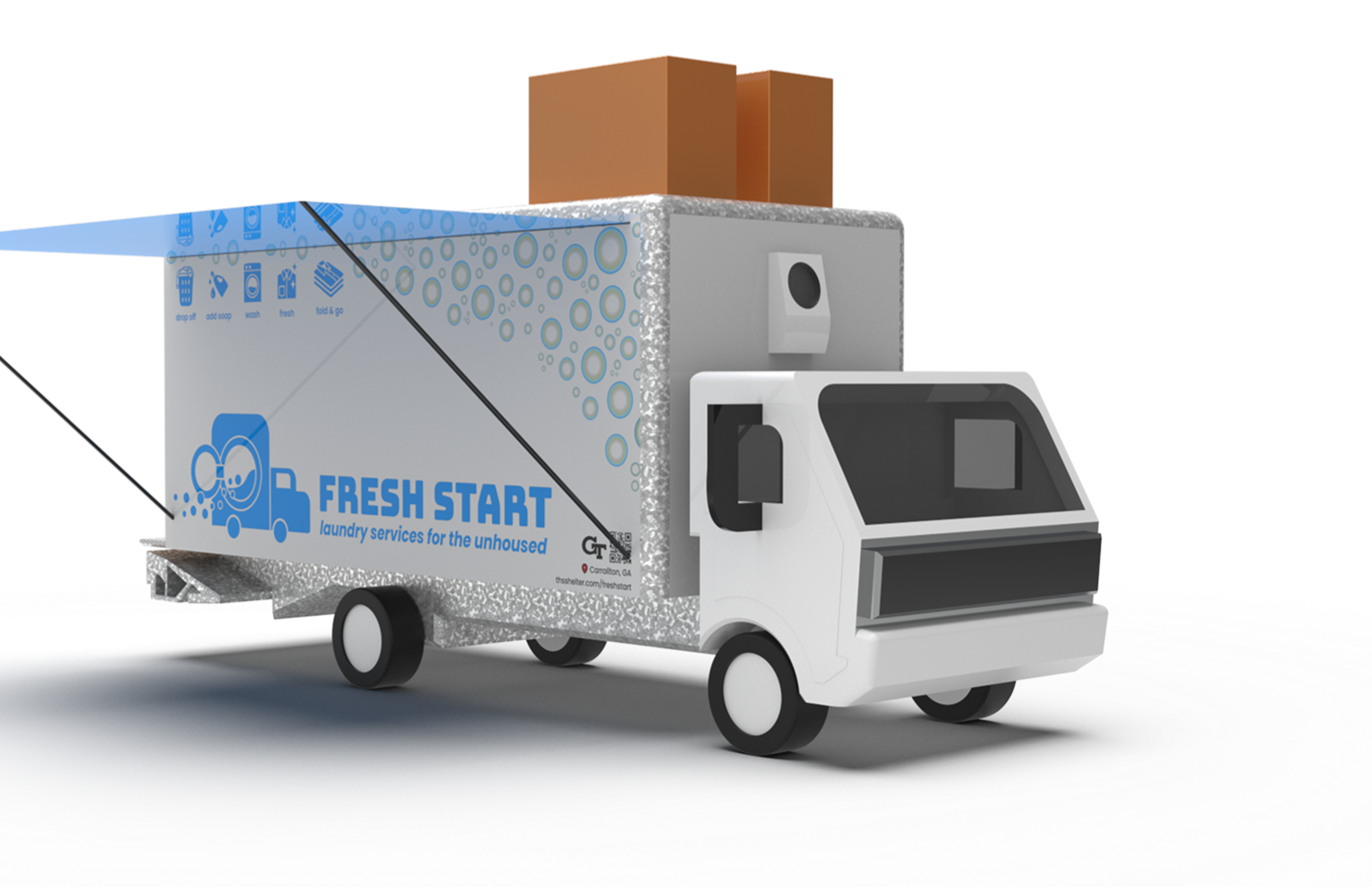
Funding pending. THS Group is awaiting funding approval for this proposal.