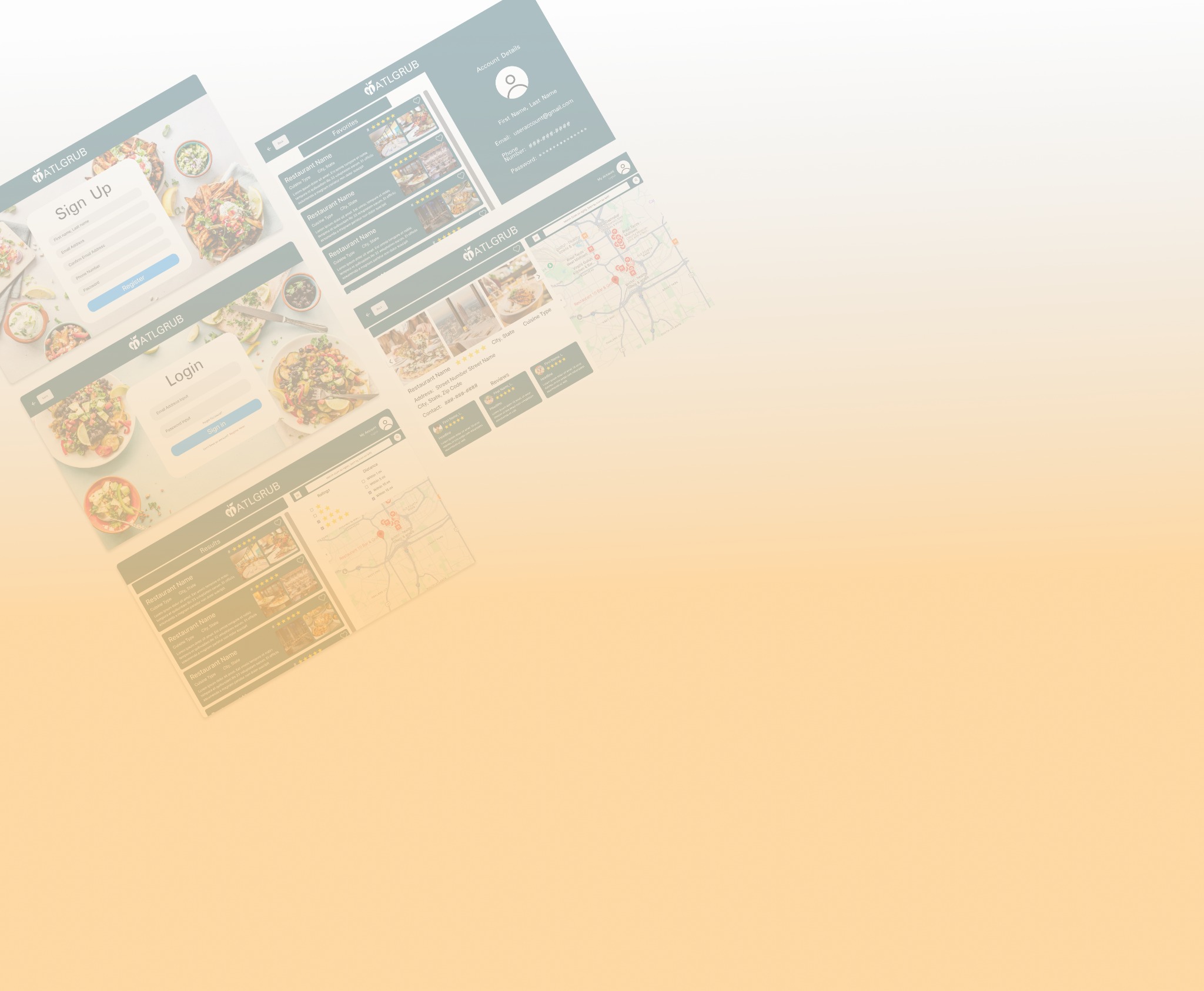
Account access
Create an account and log in to reach a personal profile and account data.
Find your next local favorite.
A 6-week, 5-person team project to build an Atlanta restaurant finder from assigned user stories. As lead front-end developer, I created task flows, low and high fidelity wireframes, and brand direction in Figma and FigJam, then built the interface in HTML and CSS. We brought the front end and Google Maps API together in a functional website.
The assignment defined five areas of the experience. These stories served as our design objectives.
Create an account and log in to reach a personal profile and account data.
Search by name, cuisine, or location and narrow results by rating and distance.
Explore restaurants on an interactive map and select a marker to open restaurant details.
Compare the information that matters including cuisine, contact details, Google ratings and reviews, plus a route to directions.
Save places for later and revisit favorite restaurants from the profile.
We reviewed the Google Maps restaurant-search experience to understand how search, map results, and restaurant information work together on a web platform.
SearchHow people enter a query and narrow their options.
Map resultsHow locations help people compare nearby places.
DetailsHow ratings, reviews, and contact information support a choice.
As a group, we mapped the actions and screens involved in finding a restaurant on a web platform. We considered the different routes a person could take through search, map results, and restaurant details before choosing a place, as well as account access and saving favorites.
The diagram helped us connect those routes before translating them into screens.
I used low fidelity screens to position search, results, restaurant information, and the map around the choice of where to eat.
Our checks focused on bringing the Google Maps API and the HTML/CSS interface together in a working web layout.
Technical integration checks. This project did not include a formal usability study.
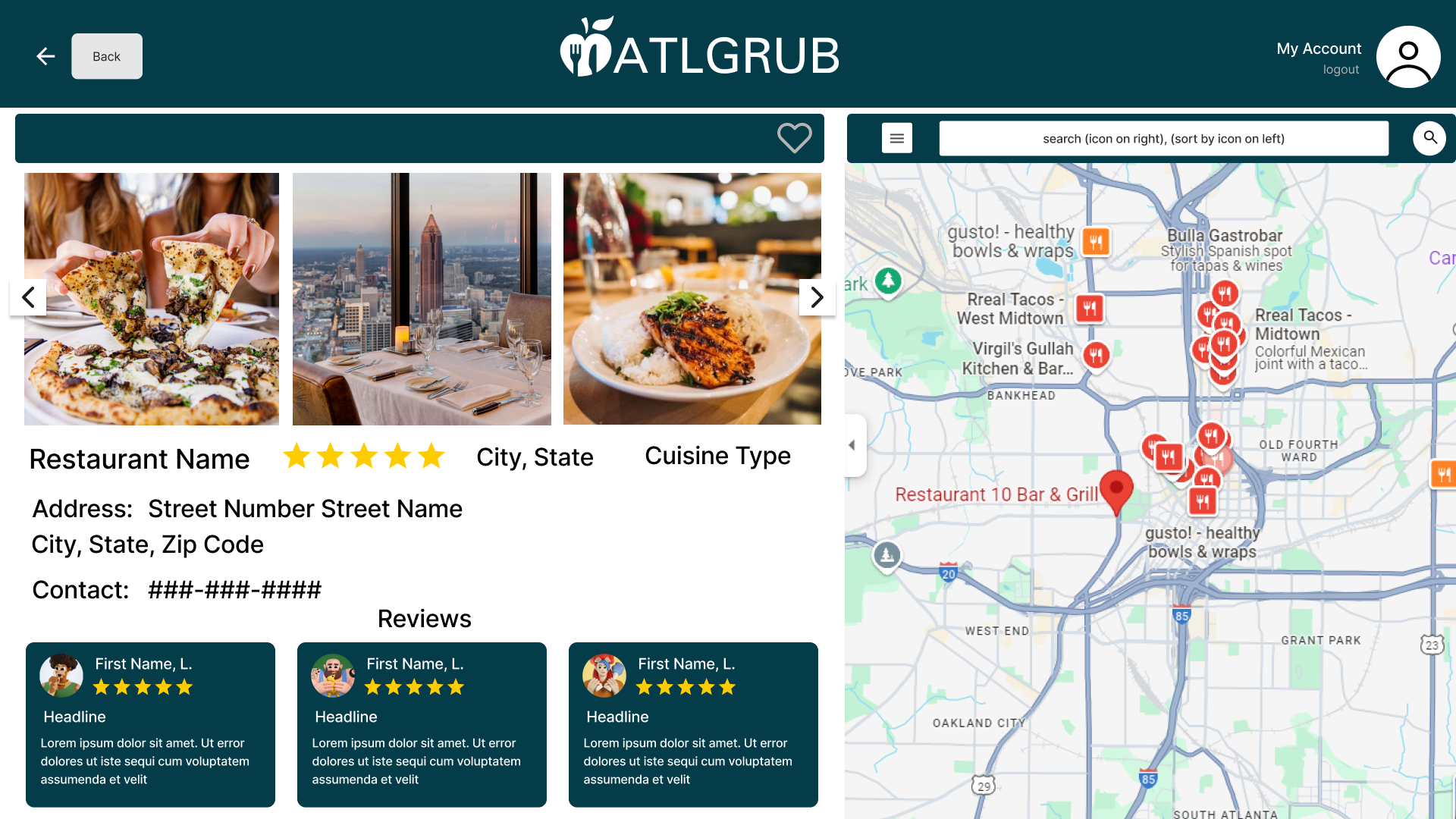
I created the high fidelity wireframes in Figma, defining the brand direction, typography, spacing, and component styling. I then translated the interface into HTML and CSS, working with the team on Google Maps integration.
Restaurant information and the map share the screen, keeping location in view while people compare ratings, cuisine, reviews, and contact details.
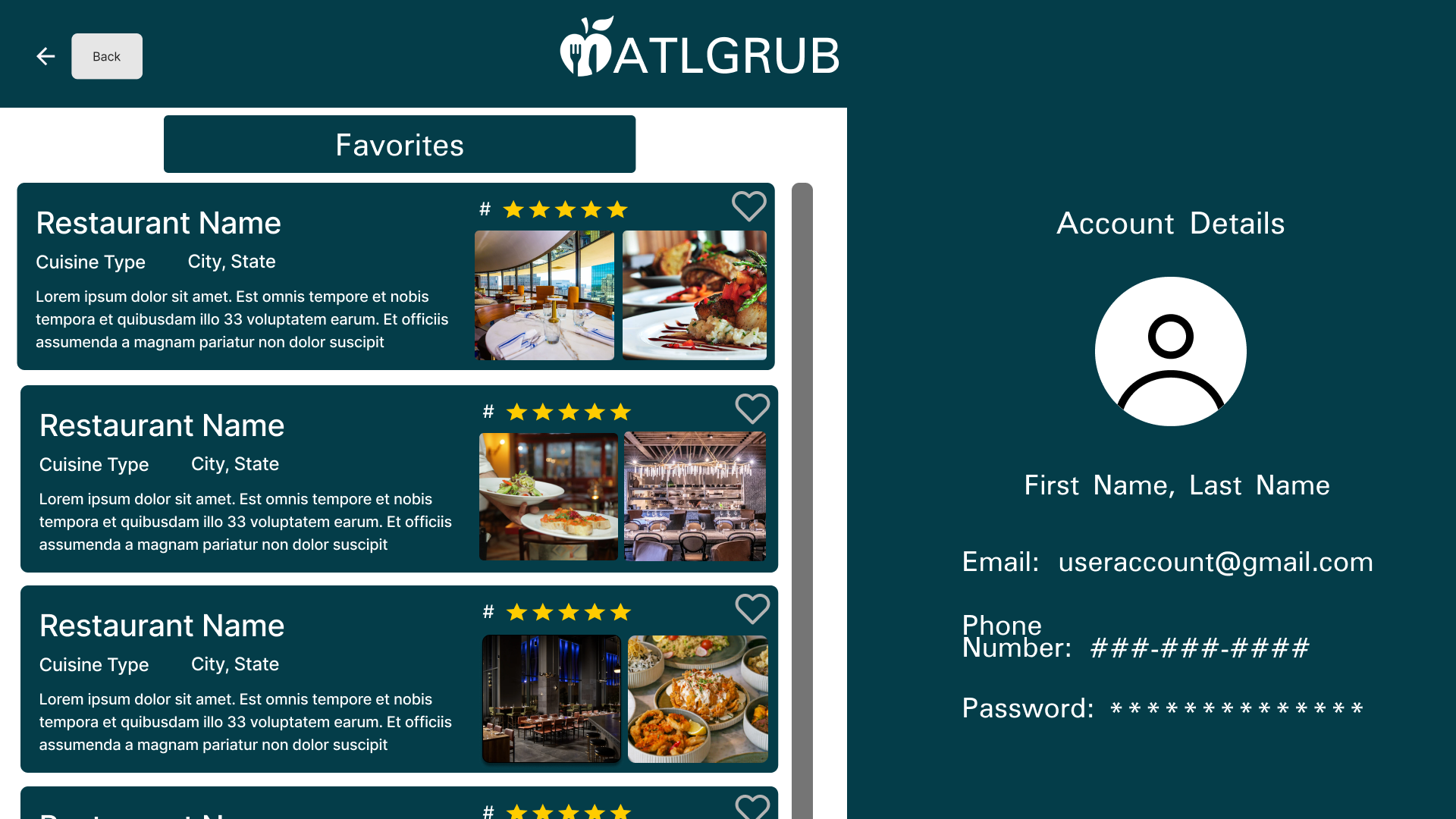
Favorites sit beside account details, giving saved restaurants a place within the personal profile.
Supporting screens carry the same brand language through login and registration.